Maestro
The most beautiful way to tune, keep time, and practice.
A studio-grade tuner, metronome, and practice companion that finally looks and feels as good as it sounds. Real-time native pitch detection drives a buttery needle and a calm in-tune color cue; a sample-accurate metronome clicks without drift; and an honest practice log turns daily minutes into visible progress. All audio is processed live on-device.
Maestro
education
The most beautiful way to tune, keep time, and practice
What you get
Maestro was built for exactly this.
The core features that make Maestro different from the generic alternatives.
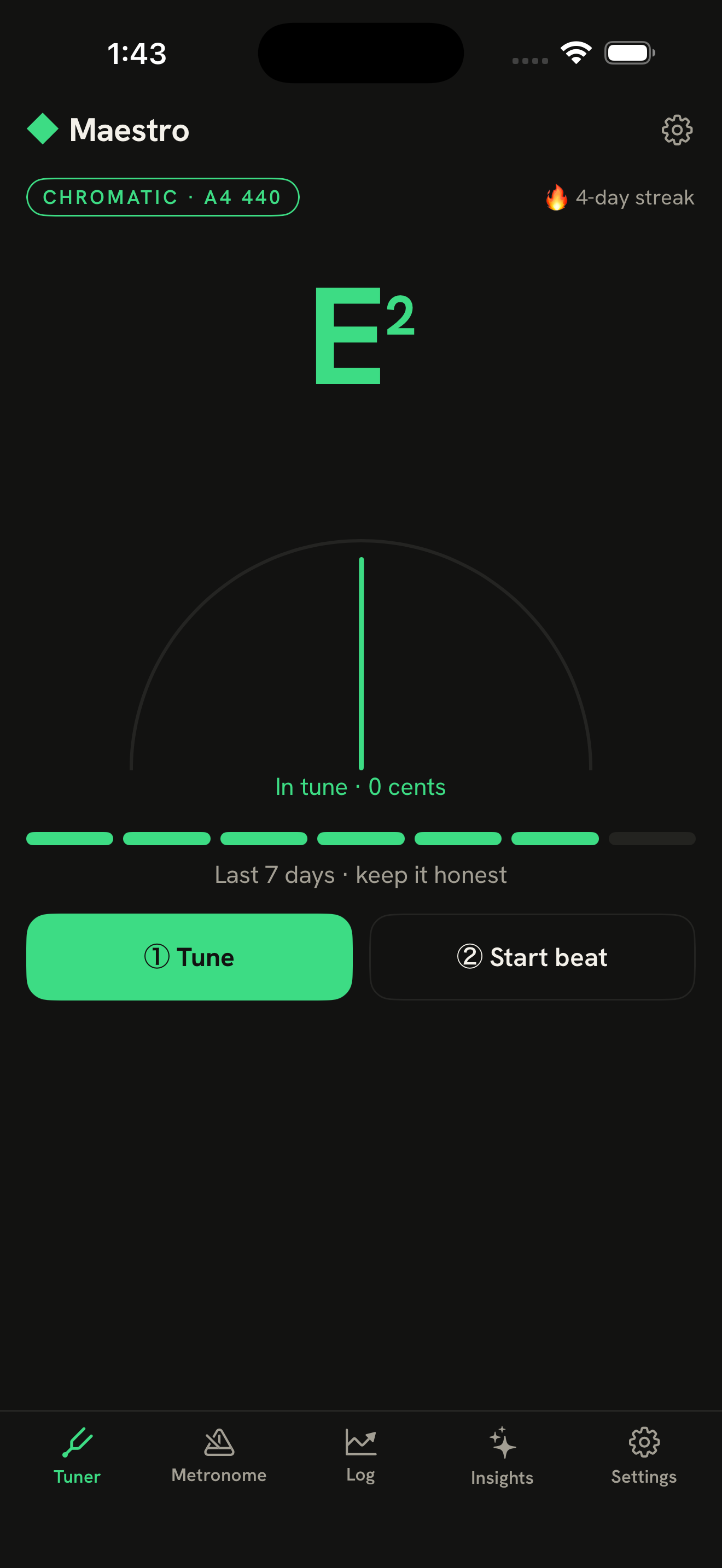
Real-time chromatic tuner with a fast, stable needle, cents readout, strobe view, and a green "locked" cue when you nail the note (in-tune within a few cents).
Instrument presets — guitar, bass, violin, ukulele, brass, voice — with strings laid out as labeled chips, plus a haptic tick the instant you hit pitch.
Alternate tunings, transposition, adjustable A4 reference (415–466 Hz), and Pro temperaments beyond equal (just intonation, Pythagorean).
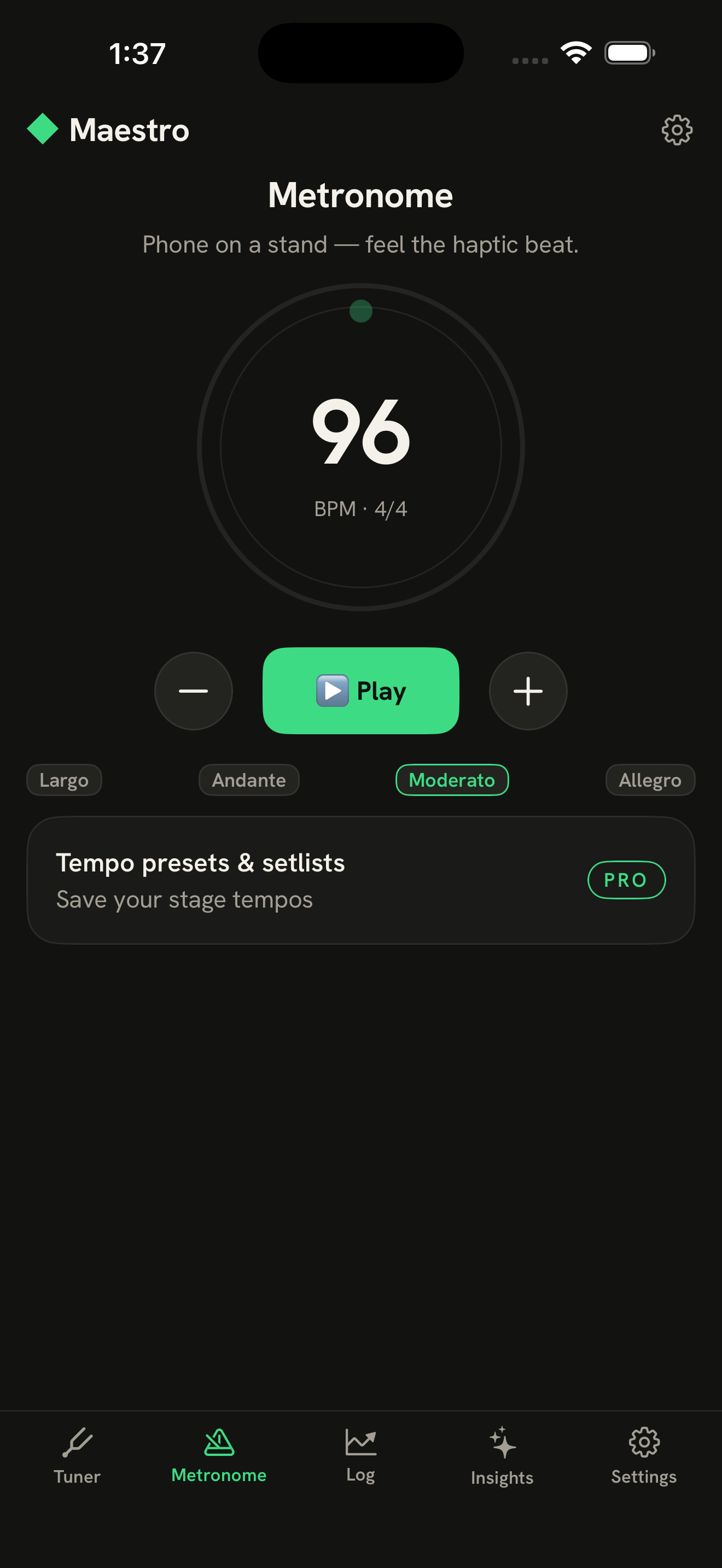
Sample-accurate metronome with tap-tempo, subdivisions, accents, time signatures, count-in, and a haptic tempo pulse you can feel.
Pro practice tools
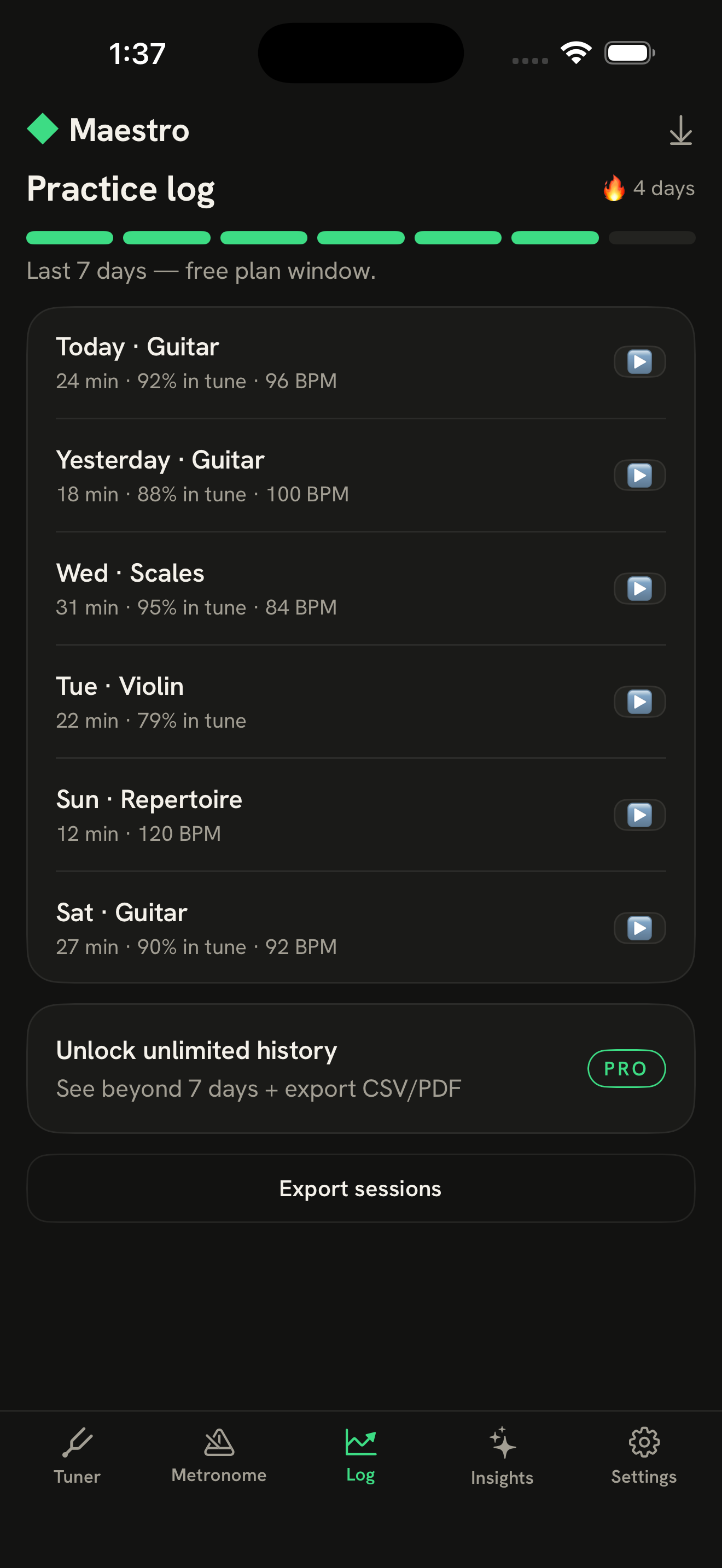
a drone / tone generator for ear training and intonation, a practice timer with an honest day streak, and a session log.
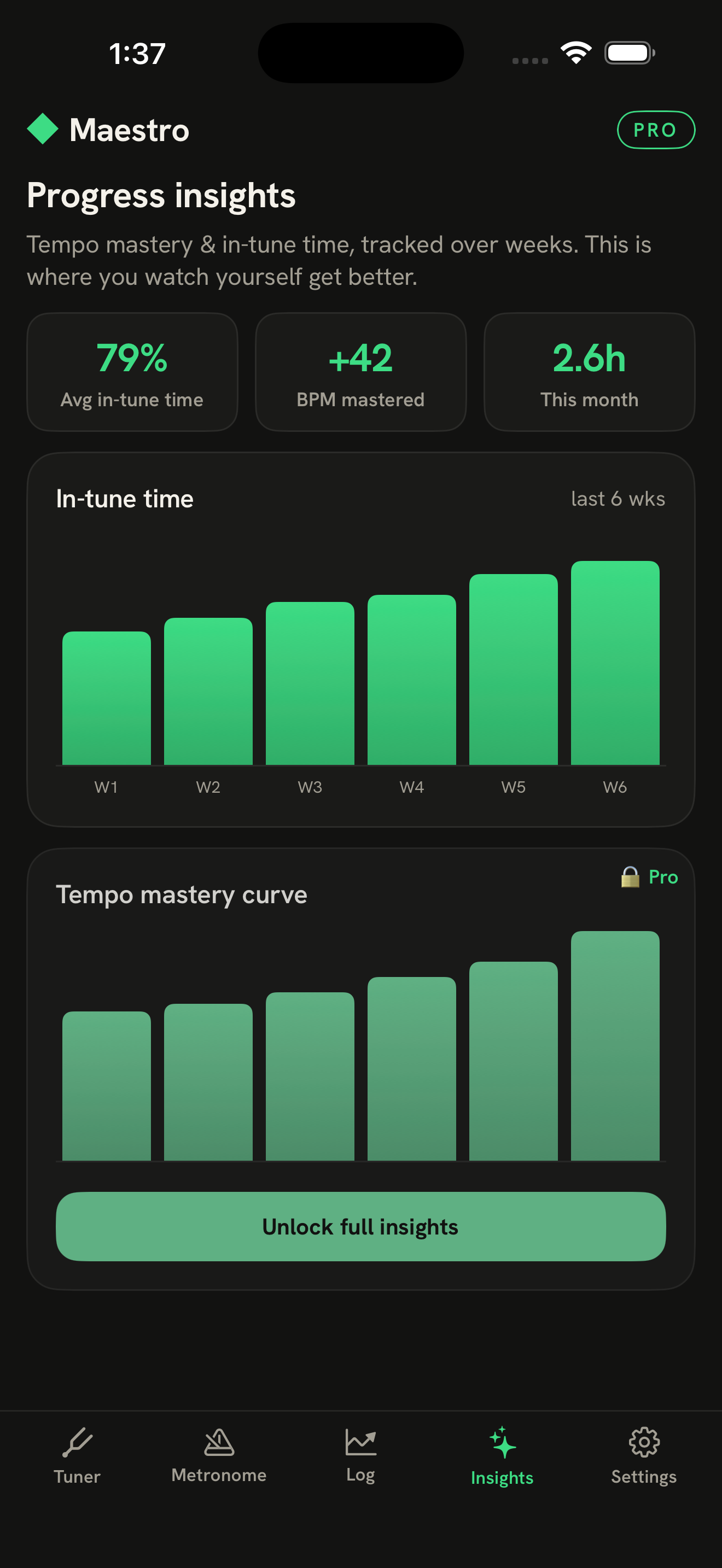
Insights charts and CSV/PDF export of your practice history, with optional iCloud sync across your devices (Pro).
A look inside
See it in your hands.
A note from the studio
“I kept downloading tuners and metronomes that were accurate but ugly — tools I used every day and never enjoyed opening. Maestro is the one I wanted: native low-latency audio, an instrument-grade gauge, and a quiet practice log that respects your time. It's free as a chromatic tuner and basic metronome; Pro is a single $4.99 unlock, never a subscription, and never any ads.”
How it works
Three steps. No account. No tracking.
01
Tune up
Open the tuner — a fast, stable needle locks in and turns green the instant you're in tune, with a haptic tick to confirm it.
02
Keep time
Switch to the metronome for a sample-accurate click with subdivisions, accents, and a felt tempo pulse.
03
Watch it add up
Log a practice session and watch your streak and insights chart turn daily minutes into visible progress.
From the journal
Notes on the practice.
- 01
How to Keep Playing After a Mistake: Why Stopping Is the Real Problem, Not the Wrong Note
Learn how to keep playing after a mistake: why your brain slams the brakes after a wrong note, and the practice habit that turns stumbles into recoveries.
2026-10-27
6 min read
- 02
Why You Mess Up the Easy Parts of a Piece (and Nail the Hard Ones)
Why do I mess up the easy parts of a piece? Because attention has a shape, and you never trained the bars you weren't afraid of. The science, and a fix you can use tonight.
2026-10-26
7 min read
- 03
Why You Cut Long Notes and Rests Short: How to Hold Long Notes for Their Full Value
Learn how to hold long notes for their full value. You clip whole notes and rush rests because of a time illusion in your brain, not bad counting. Here is the fix.
2026-10-26
7 min read
- 04
What to Think About While Playing Music: Why Noticing Your Fingers Makes You Play Worse
Wondering what to think about while playing music? The science of attention says the answer is almost never your hands. Here's where to aim your mind instead.
2026-10-26
7 min read
- 05
Why Do I Play Worse at My Music Lesson Than at Home? It's Not Just Nerves
Why do I play worse at my music lesson than at home? It's not just nerves. Your memory of the piece is wired to your room. Here's the science, and how to unhook it.
2026-10-25
6 min read
The dispatch
A dispatch from the studio.
One short letter every few weeks. What we launched, what we cut, what we learned. No tracking pixels. Unsubscribe in one click.
We collect your email address only to send you this dispatch. We never sell it, and you can unsubscribe anytime. See our Privacy Policy.
Maestro is built privacy-first. Privacy Policy · Terms of Service